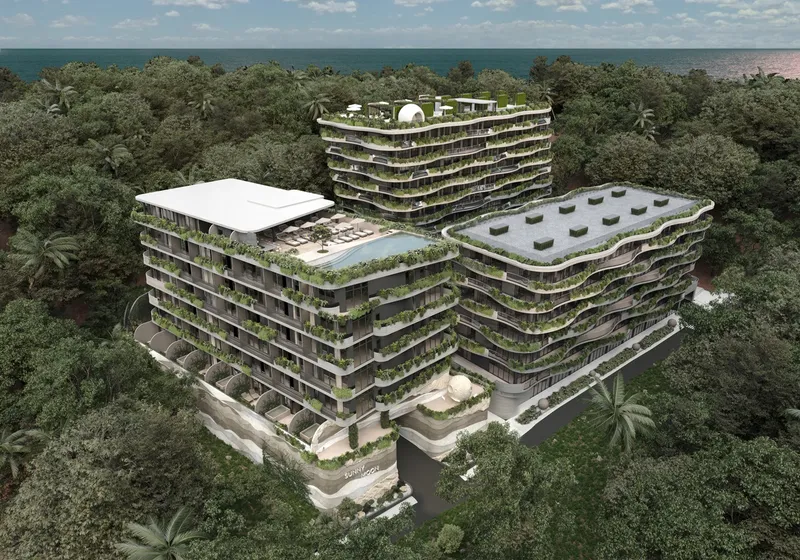
 Developer render
Price on request
There are two honest answers to this question, and which one is yours depends on what the purchase has to do. Samui is the smaller, quieter island: 34 listings in our catalogue, a median of THB 7.7M, low-rise building everywhere, one ring road instead of a road network. Phuket is the larger market: 571 listings, a median of THB 10.2M, direct international flights, international schools and private hospitals on the island itself. What follows is the decision criteria, live catalogue numbers for both islands, and a plain list of what we do not know about Samui.
Buyers compare the two islands on price and then choose on something else. The real split is whether you are buying a place to live in or a position in a market. Samui is the stronger answer to the first: smaller, calmer, learnable in a few days. Phuket is the stronger answer to the second: more stock, more transactions, more buyers arriving after you. Both are defensible.
The Samui catalogue is small and villa-weighted: 34 listings across 16 developments, of which 24 villas and 9 apartments. Entry starts at THB 3.0M, the median sits at THB 7.7M, the top of the range at THB 30M. Supply clusters on the north-east, the airport side of the island, with Lamai holding the south-east coast.
| Samui area | Listings | Entry price | Median |
|---|---|---|---|
| Bophut | 10 | THB 3.0M | THB 6.0M |
| Plai Laem | 12 | THB 5.9M | THB 8.7M |
| Lamai | 7 | THB 7.5M | THB 10.9M |
| Chaweng Noi | 5 | THB 5.5M | THB 7.8M |
Read these figures as an orientation rather than an index: on a sample this short, one new project moves the median visibly. Completion dates are not filled in for every Samui project in our catalogue, so we request them from the developer together with the direct price list. Each area has its own guide — Bophut, Plai Laem, Lamai, Chaweng and Choeng Mon — and the island overview compares them side by side.
The two medians sit closer than most buyers expect: THB 7.7M on Samui against THB 10.2M on Phuket, a difference of +33.6%. Composition is what closes the gap — Samui sells villas, Phuket sells apartments. Cost per square metre separates them much more sharply: THB 88k/m² against THB 130k/m². And the cut that matters most to anyone buying a house: the median villa runs THB 8.4M on Samui and THB 29.0M on Phuket.
One correction to that picture, because it cuts the other way. Villa entry on Samui is not the cheaper of the two: the island's most affordable villa in our catalogue is THB 5.5M, while the same line on Phuket starts at THB 4.2M. What is lower on Samui is the typical ticket, not the floor.
Phuket offers choice of a different order: 571 listings across 189 developments, of which 418 apartments and 148 villas, with entry from THB 2.1M. Districts diverge widely. Rawai holds the value end at a median of THB 8.0M; Bang Tao sits at the top of the range with THB 12.3M. For an owner that means two things: several comparable options usually exist at any given budget, and at resale the price is supported by neighbouring transactions rather than one or two.
Catalogue data ·
Samui Airport belongs to Bangkok Airways. The carrier owns and operates it, alongside its airports at Sukhothai and Trat, and that ownership shapes the route map: capacity is thin, most connections run through Bangkok, a few international routes exist, and the choice of carrier and fare is narrow. The sea route works too — car ferries cross from the mainland pier at Don Sak in Surat Thani province throughout the day, with two operators on the same link. Phuket is built the other way round: its international airport is run by the state operator Airports of Thailand and takes direct flights from abroad, and the island is joined to the mainland by the Sarasin Bridge, so you can also simply drive.
Samui is built low, and that is not a matter of taste or demand. The island, together with Phangan and Tao, sits inside the declared environmental protection area of Surat Thani province: the notification of the Ministry of Natural Resources and Environment was published in the Royal Gazette on 21 May 2025, runs for five years, and imposes a special regime on development there. We do not quote metre thresholds in this text. The limits come from several overlapping instruments and depend on distance from the shoreline, elevation above sea level and the slope of the plot, so the figures for a specific plot are checked by the transaction lawyer against the current wording.
The consequence for a buyer runs in both directions. Few buildings on the island are registered as condominiums, which narrows the choice of units available to a foreign buyer freehold within the 49% quota of a building's saleable area. In exchange, density stays where it is, and the view you buy is the view you keep.
The two islands keep different calendars. Samui sits on the east coast of the peninsula and Phuket on the west, so the monsoons reach them at different points in the year. For an owner of one property that simply means a different high season. For an owner of two on different islands it means the peaks do not collide. We publish no yield figures for either island: returns depend on the project, the management contract and the season, so we work them out per property from the operator's own statements.
Thai law does not distinguish between the two. A foreign buyer may hold a condominium unit freehold within the 49% quota of a building's saleable area. Land under a villa cannot be held freehold by a foreigner; the standard route is a registered 30-year leasehold, with renewals written into the contract. At registration you pay a transfer fee of 2% of the appraised value, and money sent from abroad should arrive with a Foreign Exchange Transaction form, which you will also want when taking proceeds out later. The difference between the islands is not legal but structural: Phuket simply has more condominium-registered buildings, so the freehold route has more to choose from.
| Criterion | Samui | Phuket |
|---|---|---|
| Catalogue inventory | 34 listings across 16 developments | 571 listings across 189 developments |
| Composition | 24 villas and 9 apartments | 418 apartments and 148 villas |
| Median price | THB 7.7M | THB 10.2M |
| Median villa | THB 8.4M | THB 29.0M |
| Cost per square metre | THB 88k/m² | THB 130k/m² |
| Access | Airline-owned airport, most routes via Bangkok; car ferries from Don Sak | State-run international airport with direct flights; Sarasin Bridge by road |
| Built form | Low-rise, no residential towers | Taller buildings, apartment-led supply |
| Resale | Narrower buyer pool, fewer comparable sales | More transactions, prices supported by neighbours |
| Services and medicine | Clinics and supermarkets on the island, complex cases go to Bangkok | Private hospitals and international schools on the island |
| Suits | A house for yourself, quiet, a place you already know | Choice, rental income, family relocation |
Start with the island you know less well. Comparisons run between the familiar and the unfamiliar, and the familiar almost always wins on feel alone. The Samui areas are covered in the island overview and in the Bophut, Plai Laem and Lamai guides; Phuket in its own area hub and the Bang Tao, Rawai and Nai Harn guides. The buying-process guide maps the legal steps from reservation to registration of title. We run transactions in English and Russian.
Developer render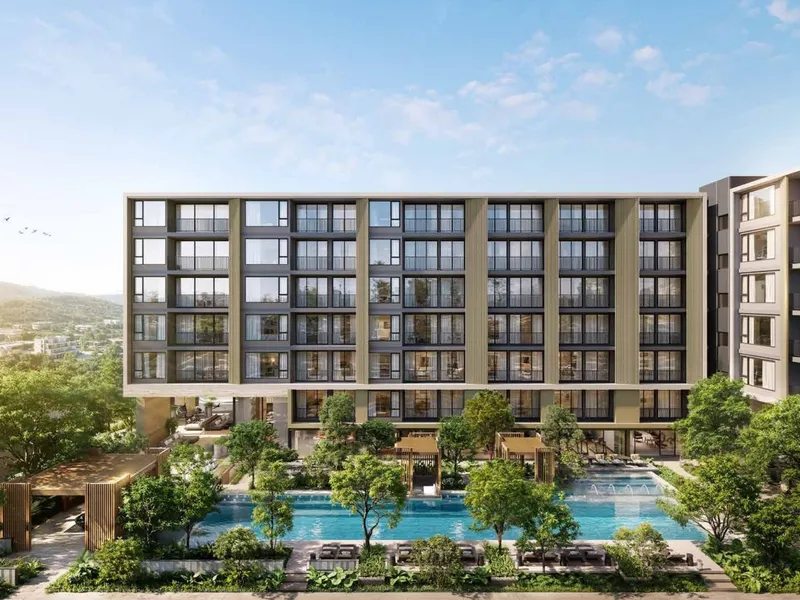 Developer render
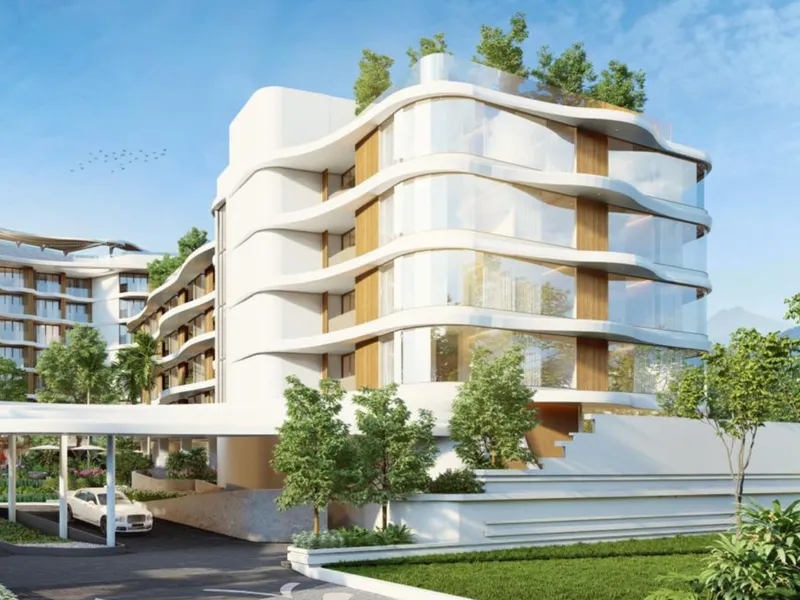 Developer render
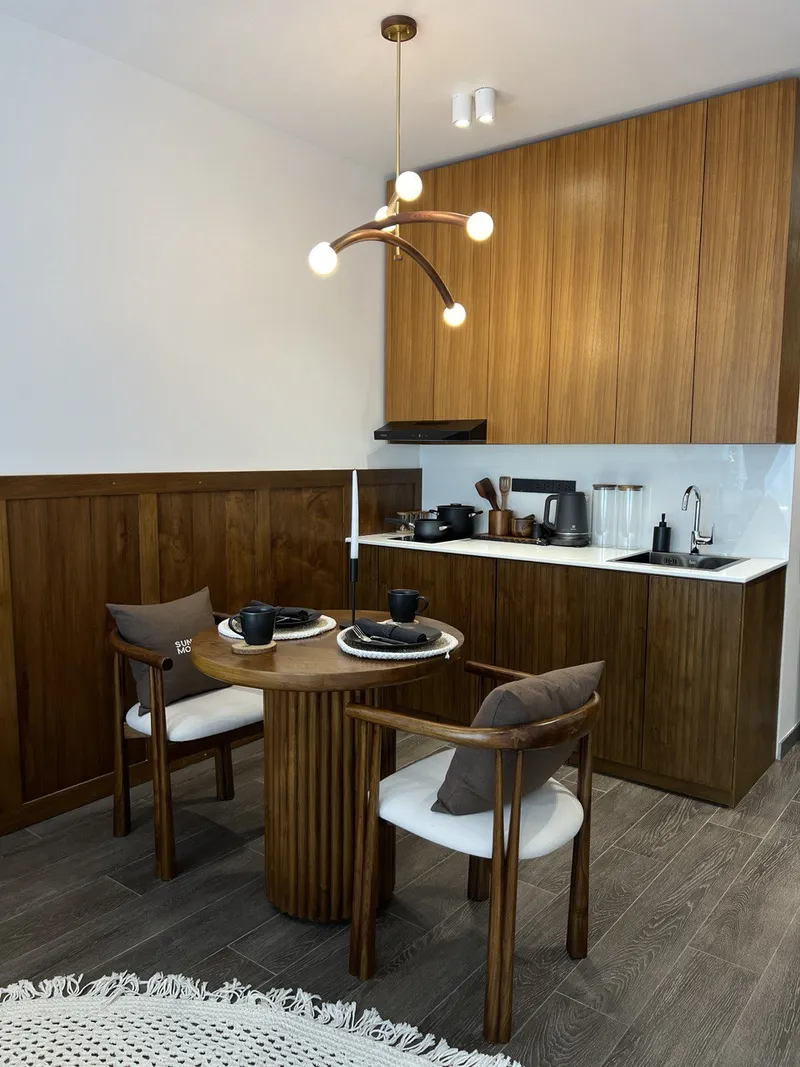 Site visit · 31 January 2025
It depends on the brief, and both answers hold. Samui is chosen for a house to live in: quieter, low-rise, cheaper per metre at THB 88k/m² against THB 130k/m². Phuket is chosen for choice and turnover: 571 listings against 34 on Samui, direct international flights, schools and hospitals on the island. If the property has to let or resell, Phuket's arguments carry more weight; if it has to be lived in quietly, Samui's do.
It depends what you measure. The catalogue medians are close: THB 7.7M on Samui and THB 10.2M on Phuket. Per square metre Samui is clearly cheaper, THB 88k/m² against THB 130k/m², and so is the median villa at THB 8.4M against THB 29.0M. Entry price runs the other way: THB 2.1M on Phuket against THB 3.0M on Samui, because Samui has almost no low-ticket condominium stock.
34 listings across 16 developments: 24 villas and 9 apartments, from THB 3.0M to THB 30M. Supply clusters on the north-east near the airport — Bophut, Plai Laem and Chaweng Noi — with Lamai on the south-east coast. The area-by-area breakdown with counts, entry prices and medians is in the table on this page and refreshes with the catalogue. It is a short sample, so its composition shifts more visibly than Phuket's.
It is quieter, and there is a structural reason beyond the island's size. Samui, with Phangan and Tao, lies inside the declared environmental protection area of Surat Thani province, where development runs under a special regime — hence no residential towers and a lower density than Phuket. The same fact has a cost: few condominium-registered buildings, so the foreign freehold route has little to choose from.
Samui has two routes. By air, through the island airport, which is owned and operated by Bangkok Airways, with most connections routed through Bangkok. By sea, on the car ferries from the mainland pier at Don Sak in Surat Thani province, which will carry your vehicle. Phuket takes direct international flights into an airport run by Airports of Thailand, and it is linked to the mainland by the Sarasin Bridge, so driving is an option as well.
Yes, and the rules are identical on both islands. A condominium unit can be held freehold within the 49% foreign quota of a building's saleable area. Land under a villa cannot be owned freehold by a foreigner; the standard structure is a registered 30-year leasehold with contractual renewals. The difference is in supply rather than law: Phuket has more condominium-registered buildings.
We do not promise a percentage on either island: returns depend on the project, the management contract and the season. Structurally, Phuket's year is flatter — direct international flights bring guests through the low season, so the dip is softer. Samui's peak is shorter, and a connection through Bangkok filters out part of the spontaneous demand. For a specific property we work from the operator's statements rather than market averages.
The difficulty is in the size of the sample rather than the island itself. The buyer pool is narrower and comparable sales are fewer, which makes a fair price harder to evidence and a marketing period harder to predict. Phuket, with 571 listings and a steady inflow of buyers, offers a more predictable exit. If your holding horizon is short, that belongs in the decision from the outset.
We will answer your questions on this topic and send a shortlist of properties for your budget.