Laguna Beach Residences Seashore
photos on requestPrice on request
Almost nobody chooses between two Phuket apartments. They choose between Phuket and another country — usually Bali, Bangkok, Vietnam, Dubai, Florida or Cyprus. Phuket wins that argument less often than agents pretend, and when it does it is almost always on one point: a foreign individual can hold a condominium here freehold, in their own name, indefinitely.
We write about Thailand with confidence because we work here. For the other markets we publish only what a linked document supports, which is why you will find ownership law and transaction costs below and almost no foreign price data.
Thailand's answer is narrow but unambiguous. A foreigner may own a condominium unit freehold within the 49% foreign quota of a building's saleable area: the title is perpetual, registered at the Land Department in the buyer's own name, and freely sold or inherited. Land is a different matter. A foreign individual cannot hold it, so a villa is a 30-year registered lease of the plot with the house owned outright, and only that first term is guaranteed in the register.
The pattern is clear enough. Dubai, Florida and Cyprus give a foreigner perpetual title including the land; Thailand gives perpetual title too, but only to an apartment and only inside the quota. Bali and Vietnam give less, and that gap reappears at resale.
Buying property in Thailand grants no citizenship and no residence permit, and none is needed to complete the purchase. Long stays run separately — the Board of Investment's LTR visa is five years with a five-year renewal — but an apartment does not open it. If a second passport is the objective, Phuket is the wrong market.
For Phuket we quote prices held directly from developers, each with a date attached. The catalogue carries 571 listings: 148 villas and 418 apartments across 189 developments, entry from THB 2.1M, median THB 10.2M. The district tiers are visible in the data — Bang Tao is the premium core at roughly THB 140k/m², Kamala sits at THB 11.3M, Nai Harn at THB 11.0M, and Rawai at THB 8.0M remains the value tier of the south.
Catalogue data ·
One cross-border comparable is worth trusting: Knight Frank's index of how many square metres of prime property one million US dollars buys. At the end of 2025 that was 33 sq m in London, 42 in Sydney, 58 in Miami, 62 in Dubai, 75 in Madrid and 80 in Lisbon. Phuket is not in the index, and we will not drop our own median into a table it was never measured for.
Thai banks rarely lend to a foreigner without local income, so the market runs on developer instalments instead. They are interest-free and involve no bank and no income check: a booking deposit, roughly 30% at contract, stage payments tied to construction, the balance at handover. The plan ends when the building does, so the monthly load is heavier than a twenty-year mortgage.
Purchase cost calculator
| Property price | THB 8,000,000 |
| Transfer fee: 50% of a 2% fee | THB 80,000 |
| Sinking fund | THB 27,000 |
| Total of included items | THB 8,107,000 |
Freehold purchase example: appraisal is assumed equal to price, the baseline fee is 2% and the buyer pays half. Enter the Land Office valuation, applicable rate and your contractual split. Concessions are not detected automatically. Excludes seller taxes, maintenance, meters, furniture and legal fees; not a lease registration calculator.
British buyers arrive with a net yield in their heads, and they are right to. Hamptons put the average gross yield on a newly bought English and Welsh buy-to-let at a record 7.1% in 2024 — an honest starting point for any comparison. What the gross figure hides is that since 2020 an individual UK landlord can no longer deduct mortgage interest from rental income and receives basic-rate relief instead.
Rental yield calculator
| Total invested | THB 8,000,000 |
| Gross annual income | THB 450,000 |
| Income after entered costs | THB 315,000 |
| Gross yield on total invested | 5.6% |
| Yield after entered costs | 3.9% |
| Simple payback | 25.4 years |
Yield uses purchase price plus acquisition and setup costs. Extra costs default to zero: enter your own budget. Include building fees, insurance and a repair allowance in fixed costs; do not also count them in the percentage. Tax and financing are not calculated automatically. Simple payback assumes unchanged income, without resale proceeds or appreciation. This is not a forecast.
For a European or American owner the flight is a genuine mark against Phuket, and buyers say so directly: Florida is close enough for the children to visit and Thailand is not. The island's international airport softens the point without removing it. The rental side compensates a little: a guest who flies half a day books a fortnight, not a weekend.
On maturity, clients tell us opposite things about Dubai in the same week — one has a friend caught out there, the next calls the timing perfect. Knight Frank settles it more calmly: prime Dubai rose 25.1% in 2025 against a 3.2% average across the hundred cities tracked, with Bangkok at 6.3%. Bali and Vietnam are younger, with more upside and more variance. Phuket sits between them, with height near the shoreline held down by zoning.
Built to be read diagonally on a phone: market first, then the questions buyers ask first.
| Market | What a foreigner holds | Term | Passport on purchase |
|---|---|---|---|
| Phuket, Thailand | Condominium freehold within the 49% quota; leasehold land under a villa | Perpetual; 30 years on the land lease | No |
| Bangkok, Thailand | Same national rules, city condominium stock | Perpetual within the quota | No |
| Dubai, UAE | Freehold in designated areas, plus usufruct and leases to 99 years | Unrestricted by time | No; long-term residence instead |
| Bali, Indonesia | Hak Pakai right of use; freehold land title closed to foreigners | 30 years, +20 extension, +30 renewal | No |
| Vietnam | Apartment in an approved project, max 30% of the building | 50 years, renewable once | No |
| Florida, USA | Fee simple, same as a domestic buyer | Perpetual | No; 15% FIRPTA withholding on sale |
| Cyprus | Freehold, but a non-EU buyer needs official permission to acquire | Perpetual | No; programme terminated 1 November 2020 |
| Türkiye | Freehold | Perpetual | Yes, from USD 400,000 with a three-year hold |
Phuket's two closest rivals are domestic. Pattaya's entry price is lower because high-rise towers are permitted, spreading land cost across hundreds of compact units — see the Phuket vs Pattaya guide. Samui is quieter, but its airport belongs to a single carrier and the resale pool is narrower — see the Samui vs Phuket guide. The ownership rules are national and identical across all three.
We sell Phuket and nothing else. We have no office, no database and no standing to price Dubai, Bali or Florida the way we price this island, so the guide is deliberately lopsided: dated Thai figures on one side, sourced ownership law on the other. Holding a projection from an agent in another country? Send it over and we will tell you where our option is the weaker one.
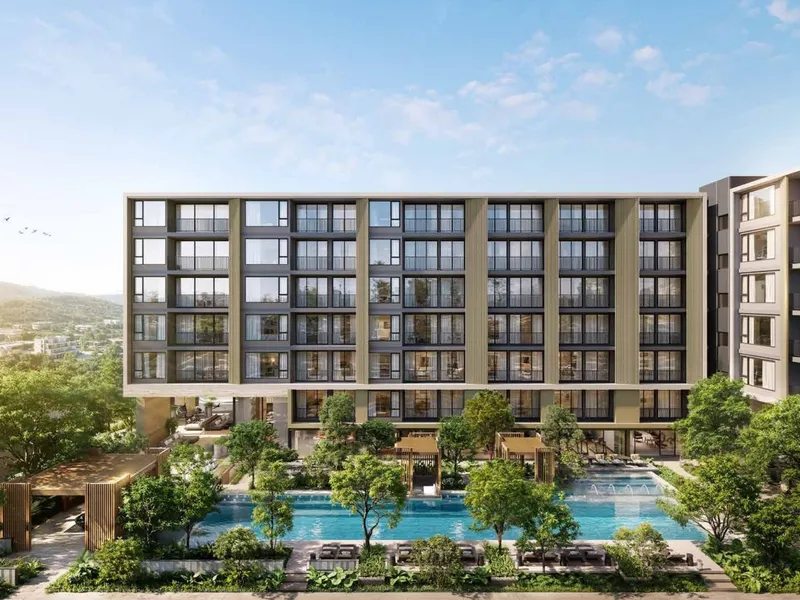 Developer render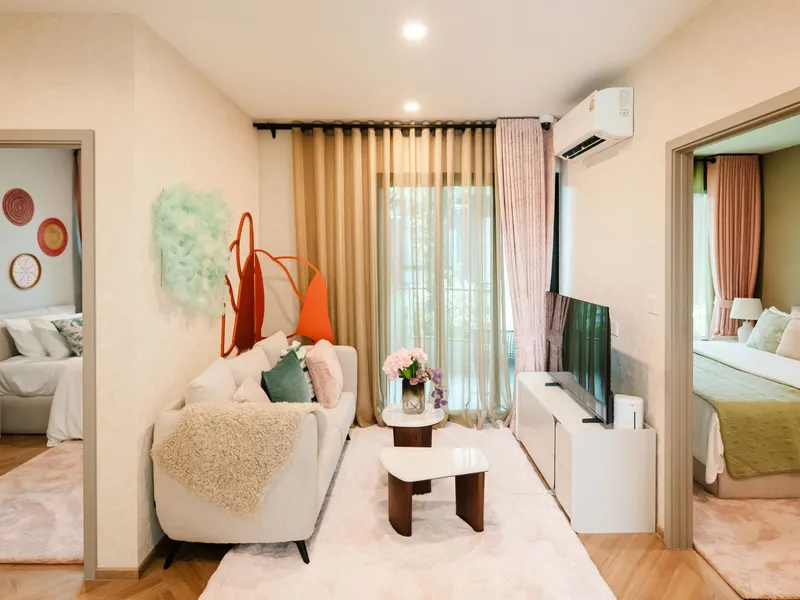
.webp)
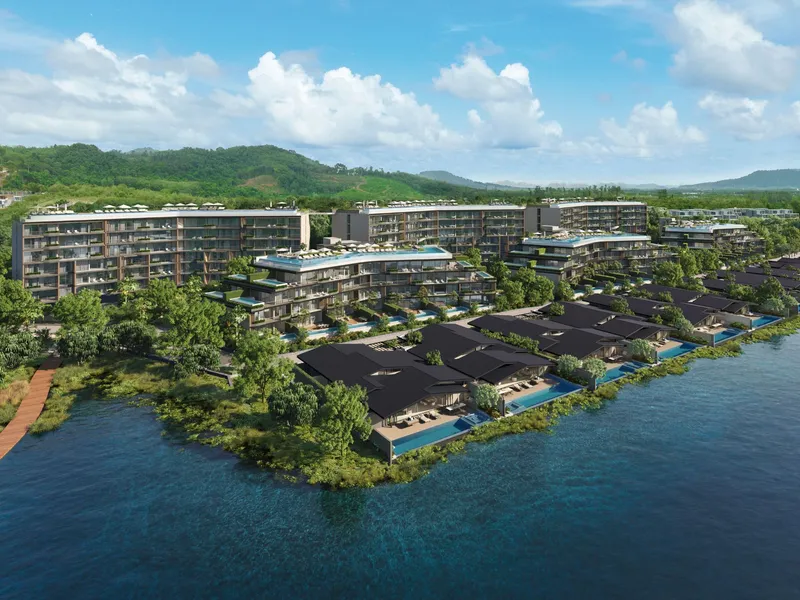 Developer render
Thai rates and procedure are set out in our guides on buying property in Thailand, foreign freehold on Phuket and Thai property taxes. None of it calculates your transaction; that is the transaction lawyer's work.
No to both. Property here carries no citizenship and no residence permit, and no visa is needed to buy either. Long stays run through a separate route such as the Board of Investment's LTR visa. Among the markets in this guide only Türkiye grants citizenship on a purchase, from USD 400,000 with a three-year holding undertaking.
A condominium unit is held freehold in your own name, perpetually, within the 49% foreign quota of the building's saleable area, and can be sold or inherited without restriction. A villa is different: the house is fully yours, the land is on a 30-year registered lease, and only that first term is guaranteed in the register. Quota and title are checked before the deposit.
Compare what the money buys rather than the headline. Freehold land title is closed to foreigners in Indonesia; what is available is Hak Pakai, a right of use running 30 years with a 20-year extension and a 30-year renewal. A Phuket condominium is perpetual, and a finite term costs more at resale than a discount saves at purchase.
We publish no Phuket yield, and you should be sceptical of anyone who does without naming the building. As a reference in the other direction, Hamptons put the average gross yield on a newly bought English and Welsh buy-to-let at 7.1% in 2024, before financing and tax. The tax arithmetic is where the two diverge: an additional English property carries a 5% stamp duty surcharge plus 2% for a non-UK resident, and an individual landlord now gets only basic-rate relief on mortgage interest. A Thai purchase is unleveraged, so neither applies — and neither does the leverage.
On ownership Dubai is at least as strong: freehold in the designated areas is unrestricted by time and covers the land, and its payment plans are longer than ours. Registration is dearer at 4% of the sale price. On price direction, Knight Frank recorded prime Dubai up 25.1% in 2025 against a 3.2% average across a hundred cities — worth knowing whether you have been told it is booming or collapsing.
Because the guide is built asymmetrically on purpose. Thai figures are ours and dated; everything about the other markets is ownership law or published research with a link attached. The section on where Phuket loses is not an afterthought. Send us a projection from an agent elsewhere and we will work through it on the same axes.
We will answer your questions on this topic and send a shortlist of properties for your budget.