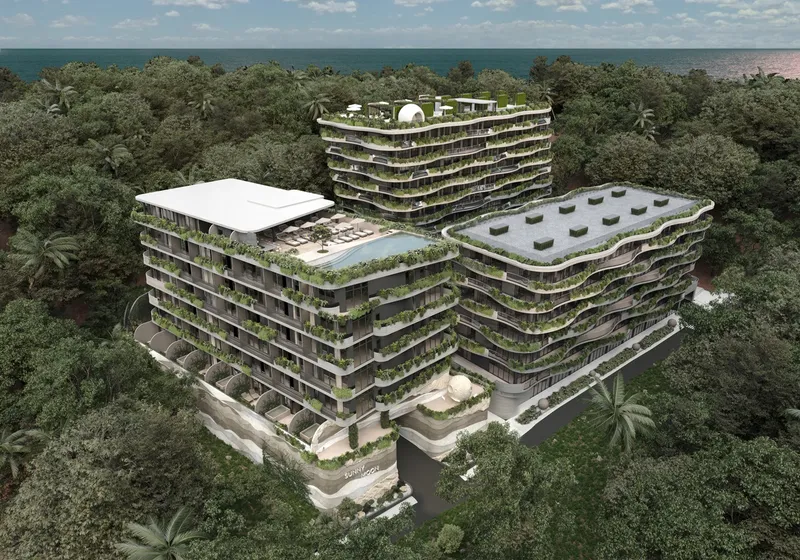
 Developer render
Price on request
For most buyers, yes — provided "worth it" is defined narrowly. Phuket property in 2026 rewards people who buy for a specific use: a home they will occupy part of the year, a rental asset priced on cash flow rather than promised appreciation, or a place to hold savings in a market where purchases are largely unleveraged. It penalises buyers who need a fast, liquid exit. The entry point is genuine — apartments in our catalogue start at THB 2.1M against an island-wide median of THB 10.2M — but resale takes patience, and the legal structure you choose matters more than the view.
The question splits into three smaller ones. Does the asset serve you while you hold it? Does the rent cover the cost of holding it? And can you get out at a price you would accept? Phuket answers the first two better than the third, which is why the island suits owners with a horizon measured in years, not quarters.
Our Phuket catalogue contains 571 listings, including 418 apartments and 148 villas. Apartment asking prices start at THB 2.1M; villas start at THB 4.2M. For district comparisons, the medians are THB 12.3M in Bang Tao, THB 8.0M in Rawai, THB 11.3M in Kamala and THB 11.0M in Nai Harn. Those numbers describe the listed homes, not a fixed ranking of district value or investment prospects.
Catalogue data ·
The cash-market point deserves emphasis because it changes the character of downturns. When buyers withdraw, Phuket prices tend to go quiet rather than collapse: owners who paid cash and pay little to hold can simply wait. That protects capital on the way down. The same mechanism slows the market on the way up and stretches resale timelines — the protection and the illiquidity are one feature, not two.
Most of the drawbacks are structural — written into Thai land law or into the cash nature of the market — and no negotiation at the sales office will remove them.
The headline price is not the final price. The transfer fee of 2% of registered value is split between buyer and seller by negotiation — in new developments the split is written into the contract, so read it before reserving, not after. Leasehold registration, common-area fees and the sinking fund come on top. The calculator below itemises the full acquisition cost for a specific budget.
Purchase cost calculator
| Property price | THB 8,000,000 |
| Transfer fee: 50% of a 2% fee | THB 80,000 |
| Sinking fund | THB 27,000 |
| Total of included items | THB 8,107,000 |
Freehold purchase example: appraisal is assumed equal to price, the baseline fee is 2% and the buyer pays half. Enter the Land Office valuation, applicable rate and your contractual split. Concessions are not detected automatically. Excludes seller taxes, maintenance, meters, furniture and legal fees; not a lease registration calculator.
Gross yield figures quoted in marketing materials share a defect: they divide optimistic revenue by the headline price and stop there. A defensible calculation starts with realistic occupancy across both seasons, subtracts management commission, common-area fees, utilities during vacancy, repairs and the cost of the furniture package, and divides by the all-in acquisition cost — including transfer fee and fit-out. The number that survives this arithmetic is smaller and far more useful.
Treat guaranteed-return programmes as unsecured developer credit, because that is what they are. The guarantee is only as strong as the balance sheet behind it, and it is typically priced into the unit. Run the numbers on the same unit without the guarantee before deciding whether the premium buys anything.
Rental yield calculator
| Total invested | THB 8,000,000 |
| Gross annual income | THB 450,000 |
| Income after entered costs | THB 315,000 |
| Gross yield on total invested | 5.6% |
| Yield after entered costs | 3.9% |
| Simple payback | 25.4 years |
Yield uses purchase price plus acquisition and setup costs. Extra costs default to zero: enter your own budget. Include building fees, insurance and a repair allowance in fixed costs; do not also count them in the percentage. Tax and financing are not calculated automatically. Simple payback assumes unchanged income, without resale proceeds or appreciation. This is not a forecast.
| District | Listings | Median price, THB | Profile |
|---|---|---|---|
| Bang Tao | 186 | 12.3M | Laguna Phuket estate, 6 km beach, Boat Avenue; the island's deepest rental market, 20 min from the airport |
| Kamala | 42 | 11.3M | Sheltered bay with the hillside "millionaire's mile"; 25 min to Patong, priced on scarcity |
| Nai Harn | 18 | 11.0M | Small, quiet south-coast enclave around a top-ranked beach; supply-constrained |
| Rawai | 53 | 8.0M | Residential south with a seafront promenade; not a swimming beach, so long-stay tenants rather than holidaymakers |
The pattern matters more than the individual numbers. Bang Tao offers liquidity and rental depth at a premium; Rawai offers a lower entry and steadier long-stay demand at the cost of the beach; Kamala and Nai Harn are scarcity plays where the exit depends on finding one buyer who wants exactly what you own. The same question gets four different answers in these four postcodes.
Developer render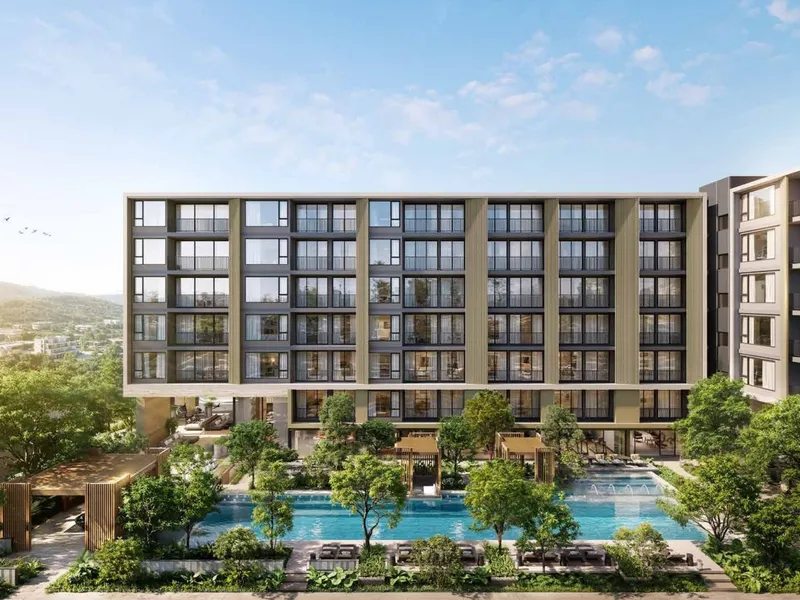 Developer render
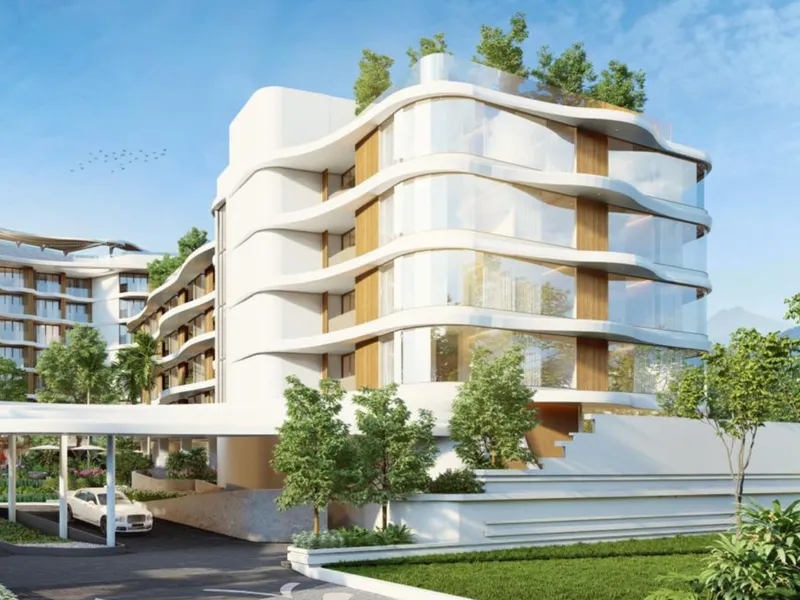 Developer render
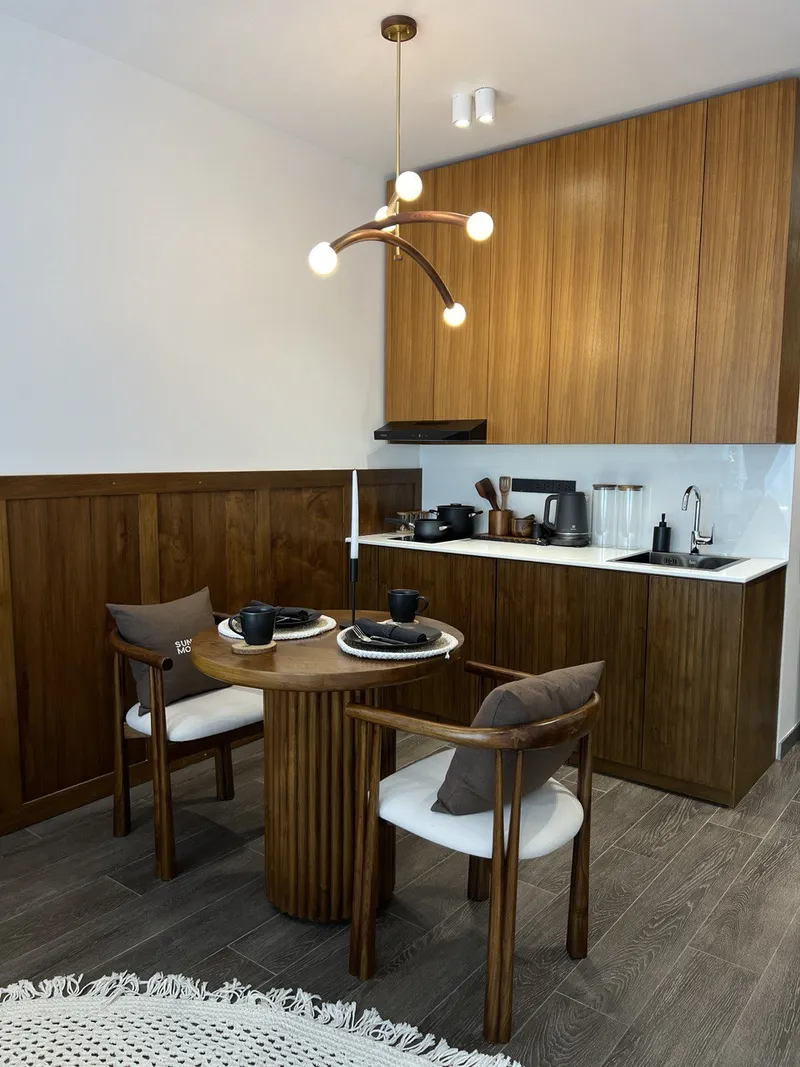 Site visit · 31 January 2025
Buy if the property earns its keep while you hold it — as a home you use, a rental you priced conservatively, or a store of value you can leave untouched for five years or more. The 2026 market supports all three: entry from THB 2.1M, a cash-buyer base that dampens drawdowns, and a high season that returns every November whatever the wider cycle does.
As a cash-flow and use asset, it can be: entry from THB 2.1M, low holding costs and tourism-backed rental demand. As a leveraged growth trade it is not — financing for foreigners is scarce and resale takes time. Price the purchase on conservative rent, not on expected appreciation.
Condominium units, yes — foreign freehold is available within the 49% foreign quota of a building's sellable area. Land cannot be foreign-owned, so villas are held on a 30-year registered lease or through legal structures that need ongoing maintenance. Check the remaining quota before reserving a specific unit.
Apartment entry in our Phuket catalogue is THB 2.1M; villa entry is THB 4.2M. Use the exact asking price on the property card and add the costs of purchase and setup. A catalogue floor is not a complete purchase budget.
The main government charge is the transfer fee of 2% of registered value, split between buyer and seller by negotiation — in new projects the split is fixed in the contract. Leasehold deals carry a lease registration cost instead of an ownership transfer. There is no recurring annual property tax comparable to Western holding taxes for a typical residential owner.
Foreign freehold on a condominium is the cleaner asset: it is registered ownership and resells to the widest pool of buyers. A 30-year leasehold costs less upfront, but renewal rests on the developer honouring a contract — nothing beyond the first 30 years is registered at the Land Office — and the remaining term shortens every year you hold. Discount a leasehold price accordingly.
Start with the intended tenant and a property-level budget. Our catalogue medians are THB 12.3M in Bang Tao and THB 8.0M in Rawai; entry prices are THB 3.1M and THB 3.6M. A median is not an entry price, and neither figure measures achieved rent or resale speed.
Waiting in a cash market rarely buys a discount — owners with no debt are slow to cut prices, while new supply keeps arriving at higher build costs in the popular corridors. If a specific unit fits your use and its rent covers its holding costs at conservative occupancy, timing the cycle adds risk without a clear reward.
We will answer your questions on this topic and send a shortlist of properties for your budget.