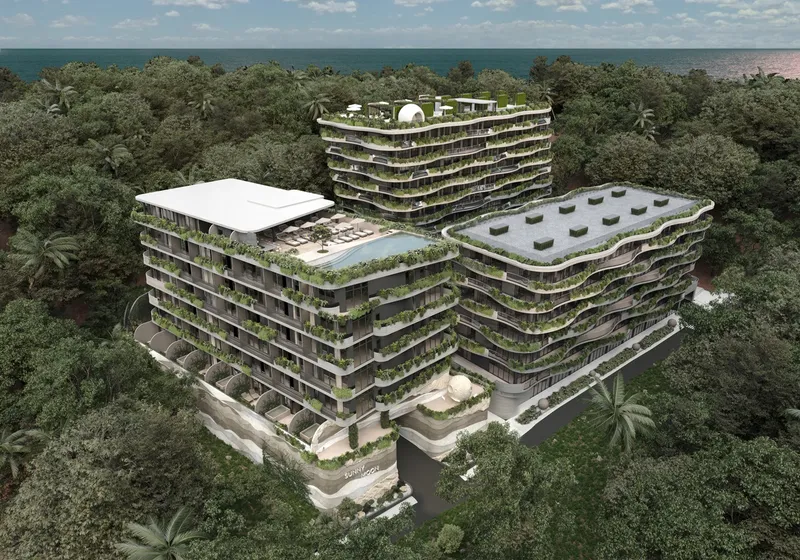
 Developer render
Price on request
Yes — foreigners can buy property in Thailand, but the law splits the market in two. Apartments in registered condominiums can be owned outright, in the buyer's own name, as long as foreign owners hold no more than 49% of the building's saleable area. Land — and therefore most villas — cannot be owned directly by a foreign individual; the standard structure is a 30-year lease registered at the Land Office. This guide covers both routes, the step-by-step purchase process, the FET form for overseas payments, and what the transaction actually costs.
Thailand's Condominium Act allows a foreign national to hold full freehold title to a condominium unit, registered in their own name at the Land Department. The one structural limit is the foreign quota: across any single building, foreigners may own no more than 49% of the combined unit floor area. Quota is a property of the building, not the buyer — the same unit can be available freehold today and leasehold-only after two more foreign transfers close ahead of yours.
Before paying a reservation fee, ask the developer or the juristic person (the building's management entity) for written confirmation of the remaining quota. In new projects aimed at international buyers the quota is managed deliberately; in older buildings in popular locations it can be close to exhausted. Freehold units inside the quota typically trade at a premium over identical leasehold units in the same building — a spread worth verifying rather than assuming.
Foreigners cannot own land in Thailand, and a villa without its land is a building on someone else's plot. The market's answer is leasehold: a lease of up to 30 years, registered against the land title at the Land Office. Registration is the substance of the deal — an unregistered lease longer than three years is enforceable only for its first three.
Contracts often add two renewal options of 30 years each, marketed as "30+30+30". Read those as contractual promises by the current landowner, not property rights: Thai law registers only the first 30 years, and each renewal depends on the lessor — or whoever succeeds them — honouring the option. A cleaner structure separates building from land: the house itself can be owned by the foreigner outright, with the lease covering only the plot. Holding a villa through a Thai company with nominee shareholders is still widely marketed and is against the law; an agent who proposes it casually is telling you something about their other advice.
A purchase from a developer follows a standard sequence. Resale and leasehold deals add due diligence but keep the same shape, and none of it requires the buyer to be resident in Thailand — most steps can be handled remotely under power of attorney.
To register a freehold condominium, a foreign buyer must show the Land Office that the purchase money entered Thailand as foreign currency. The receiving Thai bank converts the transfer into baht and issues a Foreign Exchange Transaction form (FET) for amounts equivalent to USD 50,000 or more; smaller transfers are documented with a bank credit note and confirmation letter, which the Land Office also accepts.
Three details prevent most FET problems. The sender's name must match the buyer's name on the purchase contract. The stated purpose of the transfer should reference the condominium purchase, ideally naming the project and unit. And the money must arrive as foreign currency and be converted in Thailand — sending baht defeats the paperwork. The FET matters on exit too: it is the basis for repatriating sale proceeds later without questions from the bank.
Costs at transfer are calculated on the official appraised value or the declared price and paid at the Land Office on registration day. Allocation between the parties is a matter of contract: on resales the 2% transfer fee is commonly split, while the seller's taxes are usually — but not automatically — the seller's cost. Fix the allocation in the sale agreement, not at the counter.
| Item | Rate | When it applies |
|---|---|---|
| Transfer fee | 2% of appraised value | Every registered transfer of ownership |
| Specific business tax | 3.3% | Seller held the property under 5 years (covers most developer sales) |
| Stamp duty | 0.5% | Only when specific business tax does not apply |
| Withholding tax | 1% for corporate sellers; progressive scale for individuals | Collected at the Land Office at transfer |
| Lease registration | 1% registration fee + 0.1% stamp duty on total rent | Registering a 30-year leasehold |
For a leasehold, the registration cost is calculated on the total rent across the lease term. Budget separately for the sinking fund — a one-off contribution on new units — and the monthly common-area fee, both set per square metre and stated in the sale agreement.
One cost is not on the buyer's side at all. On the primary market the developer pays the agent's commission, so buying through an agency costs the same as buying at the developer's own sales office. Budget separately only for what you order yourself: the transaction lawyer, certified translations and, for a remote purchase, a power of attorney.
Most new projects on Phuket sell off-plan with staged payment: a reservation deposit, a payment at contract signing, instalments tied to construction milestones, and the balance at transfer of title. The split is more negotiable than price lists suggest, particularly the share left to transfer. Instalments are an arrangement with the developer, not bank credit — there is no interest, but also no third-party protection unless the project uses escrow, which in Thailand remains the exception rather than the rule.
Before signing, read the contract against this list:
aperwind's catalogue currently tracks 571 properties for sale on Phuket at developers' direct prices — 418 apartments and 148 villas — starting from THB 2.1M, with an island-wide median of THB 10.2M. Demand concentrates on the west coast: Bang Tao alone lists 186 properties at a median of roughly THB 140k/m².
| District | Listings | Price range, THB | Median, THB |
|---|---|---|---|
| Bang Tao | 186 | 3.1M – 92.9M | 12.3M |
| Rawai | 53 | 3.6M – 98.5M | 8.0M |
| Kamala | 42 | 4.0M – 179.0M | 11.3M |
| Nai Harn | 18 | 4.3M – 28.8M | 11.0M |
Catalogue data ·
Each district page on aperwind — the Bang Tao catalogue, villas and apartments in Rawai, new developments in Kamala and Nai Harn — shows the developer's direct price with the date it was last updated, alongside developer materials labelled by source and our own site-visit videos. Beyond Phuket, the catalogue covers Samui (34 properties), Bangkok (39) and Pattaya (2).
Developer render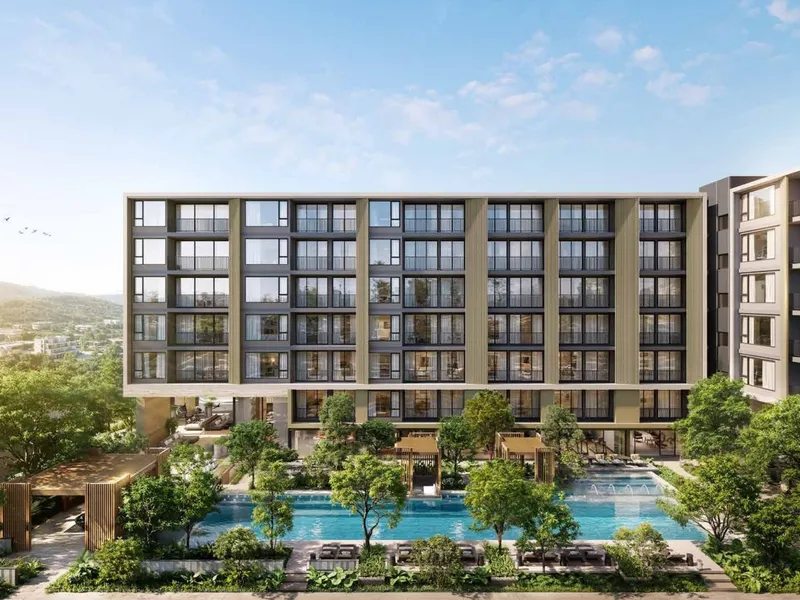 Developer render
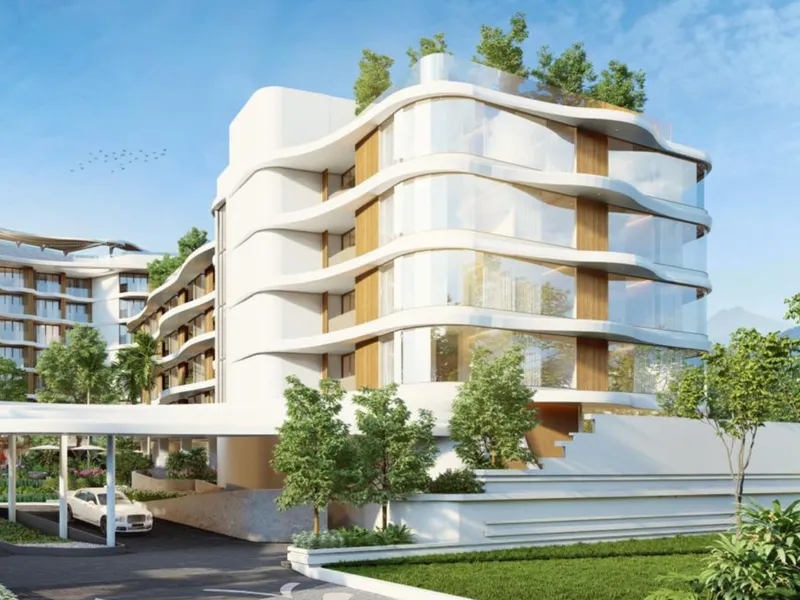 Developer render
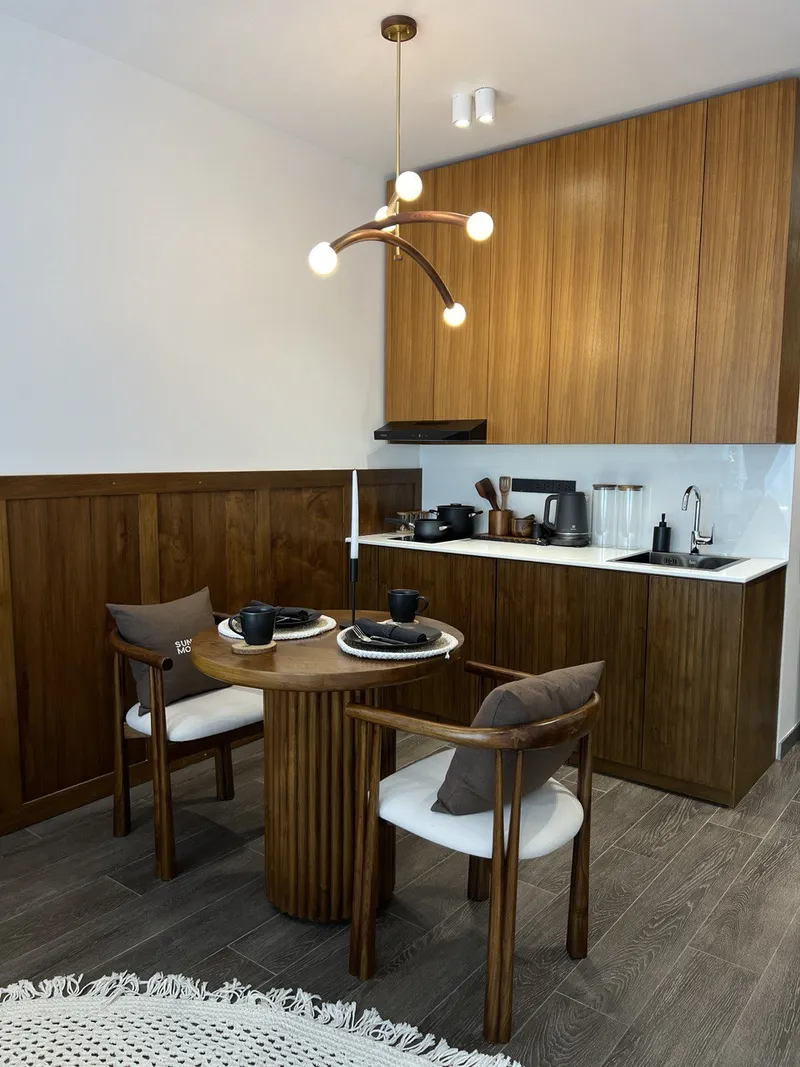 Site visit · 31 January 2025
Yes. A foreigner can hold freehold title to a condominium unit registered in their own name, provided foreign ownership in that building stays within 49% of the combined unit area. Land and most villas are instead held through a 30-year lease registered at the Land Office.
No — direct land ownership by foreign individuals is not permitted. Villas are typically structured as a registered 30-year lease on the land, sometimes with separate outright ownership of the building itself. Holding land through a Thai company with nominee shareholders is illegal and should be avoided.
The Foreign Exchange Transaction form is a Thai bank document confirming that your purchase funds entered the country as foreign currency. Banks issue it for inbound transfers equivalent to USD 50,000 or more. It is required to register a freehold condominium in a foreign name and later supports repatriating sale proceeds.
Only the first 30 years can be registered. Renewal options for further terms are contractual promises that depend on the landowner — or their successor — honouring them; they are common in villa contracts but are not property rights. Price leasehold accordingly and have a lawyer assess the renewal mechanism before signing.
The transfer fee is 2% of the appraised value, and its allocation between buyer and seller is set by contract — an even split is common. The seller's taxes (specific business tax of 3.3% or stamp duty of 0.5%, plus withholding tax) are usually the seller's cost, but confirm the allocation in the sale agreement.
Thai bank financing for non-resident foreigners is limited and rarely on competitive terms. In practice most foreign buyers pay cash transferred from abroad or use developer instalment plans on off-plan projects, which spread payments across the construction period without bank involvement.
aperwind's catalogue lists Phuket properties from THB 2.1M, with an island-wide median of THB 10.2M across 571 listings. District medians range from THB 8.0M in Rawai to THB 11.0M in Nai Harn, and Bang Tao apartments run at a median of roughly THB 140k/m².
We will answer your questions on this topic and send a shortlist of properties for your budget.