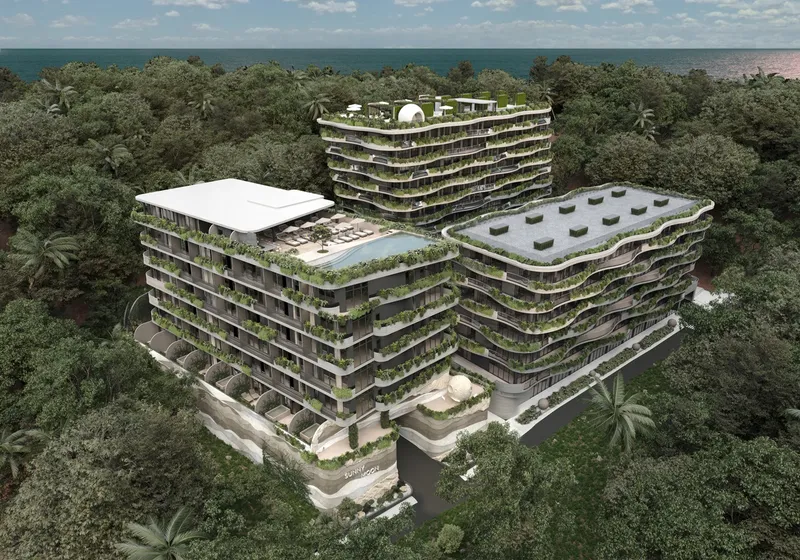
 Developer render
Price on request
For a freehold condominium purchase, budget separately for the property price, transfer costs and setup. The baseline transfer fee is 2% of the government-appraised value, not the advertised price. Seller-side taxes include specific business tax or stamp duty, plus income-tax withholding. Your agreement, any mandatory contract rules and applicable concessions determine the amount you actually pay. Annual building charges and tax on rental income belong in a separate ownership budget.
Ask for both the contract price and the official appraised value. They serve different calculations; do not assume the appraisal equals the price or is always lower. The table shows baseline rates, not an assessment of your transaction. Confirm any relief and the allocation of costs before paying a deposit.
| Tax or fee | Rate | Calculation base | Customarily paid by |
|---|---|---|---|
| Transfer fee | 2% | Official appraised value | Split between buyer and seller |
| Specific business tax (SBT) | 3.3% | Higher of sale price or appraised value | Seller |
| Stamp duty | 0.5% | Higher of sale price or appraised value | Seller |
| Withholding tax | Progressive scale (individuals) or 1% (companies) | Appraised value (individuals); higher of the two (companies) | Seller |
SBT includes local tax and totals 3.3%. An individual selling within five years may be liable, subject to exceptions such as inheritance and a qualifying main residence with the required house-book registration. Developers and business assets held by companies have separate rules; passing five years does not itself remove their liability. Where SBT applies, stamp duty is not also charged on the same sale receipt. Corporate seller withholding is 1% of the higher of price or appraisal; individual withholding uses a statutory formula. For developer sales, have a lawyer check the applicable mandatory contract form rather than assuming one cost split covers every new build or villa.
Purchase cost calculator
| Property price | THB 8,000,000 |
| Transfer fee: 50% of a 2% fee | THB 80,000 |
| Sinking fund | THB 27,000 |
| Total of included items | THB 8,107,000 |
Freehold purchase example: appraisal is assumed equal to price, the baseline fee is 2% and the buyer pays half. Enter the Land Office valuation, applicable rate and your contractual split. Concessions are not detected automatically. Excludes seller taxes, maintenance, meters, furniture and legal fees; not a lease registration calculator.
The local authority assesses land and building tax using the official valuation, use category and applicable relief. Ask for the assessment for your property and tax year. A residential letting by the month or year and daily hotel-style use can fall into different categories; neither 'all rentals pay more' nor 'all rentals stay residential' is a safe rule.
Two payments are specific to condominiums and are set at project level rather than by statute. The common area management (CAM) fee funds day-to-day operation — security, pools, gardens, lifts — and is charged per square metre of your unit, usually billed a year in advance; the rate is fixed in the project's regulations and can be revised by a vote of co-owners. The sinking fund is a one-time, per-square-metre contribution collected at handover and reserved for capital repairs; co-owners can vote to replenish it later. Villa estates with shared infrastructure charge comparable fees under a private management agreement. Both figures are stated in the developer's payment schedule, so request them alongside the price list — for any of the 189 developments in our Phuket catalogue we can provide the current rates on request.
For the usual foreign-currency route to a foreign freehold condominium purchase, agree the transfer purpose and documentary requirements with the receiving bank before sending funds. An FET form is not the only accepted evidence in every case; another bank certificate may apply, and some buyer categories have different requirements. Keep the evidence for registration and a future sale. It does not replace title and quota checks. Lease registration uses a different fee structure from a transfer of ownership; have the registered term, rent base and stamp duty checked for that contract.
Rental income from Thai property is Thai-source income and taxable in Thailand regardless of where you live. Individual owners are taxed on the progressive personal scale with a top rate of 35%, after either documented expenses or a standard 30% deduction for rentals of buildings. Where rent is paid to a non-resident owner, the payer generally withholds 15%, which the owner can reconcile by filing a Thai return. Most of Thailand's double-tax treaties allow tax paid here to be credited at home, so the practical outcome depends on your country of residence — a question worth settling with an adviser before structuring the purchase, not after.
Start with the purchase price, then add your agreed transaction costs, legal work, furniture and any initial building fund. Our Phuket catalogue currently lists 571 properties, starting from THB 2.1M with a median of THB 10.2M. Confirm the price and payment schedule for the chosen unit before committing. The calculator covers only its named items, not every payment a transaction may require. Keep the annual ownership budget separate from the initial outlay.
Catalogue data ·
Developer render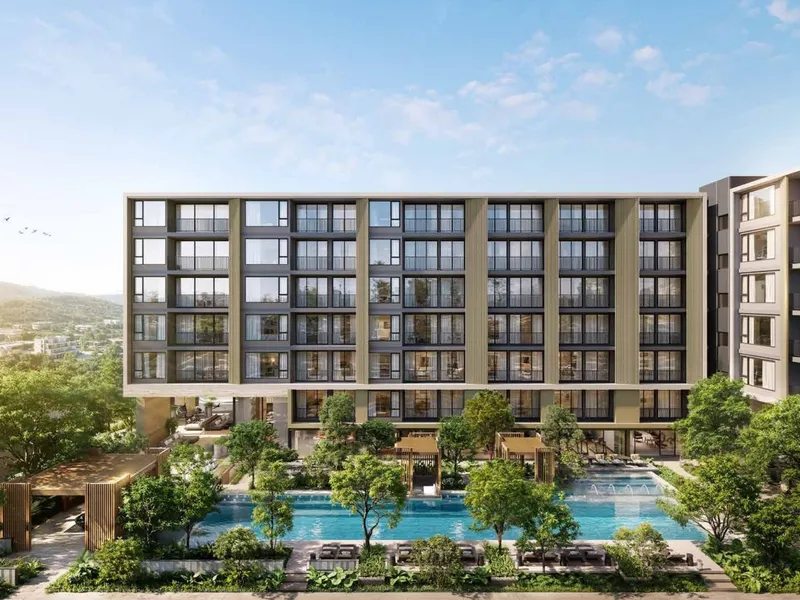 Developer render
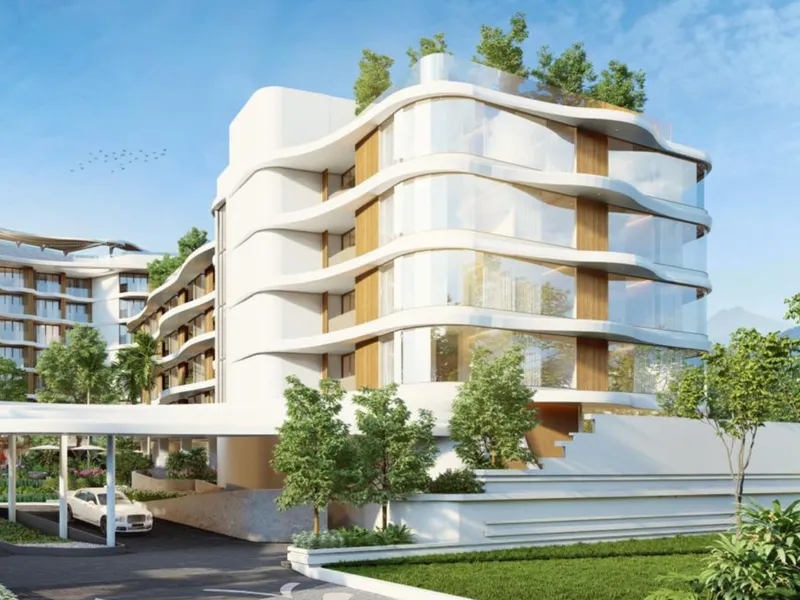 Developer render
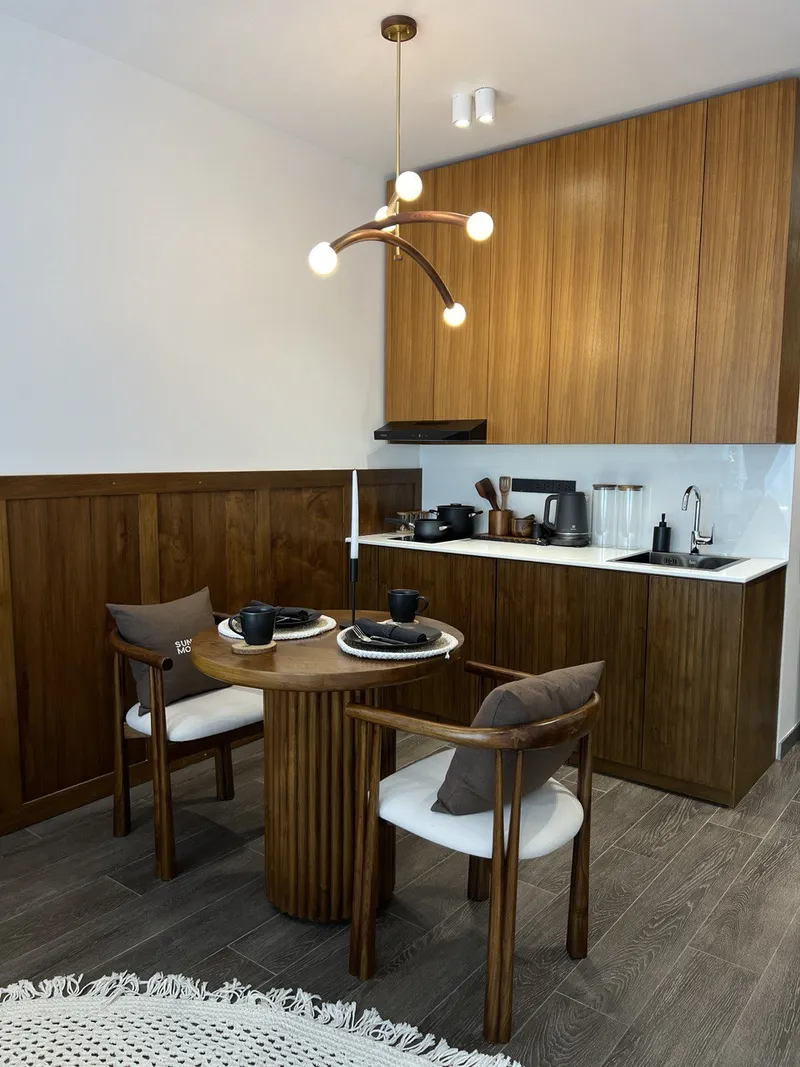 Site visit · 31 January 2025
Baseline rates are not a transaction quote. A Thai adviser should check current relief, the contract and your tax status. A source-access date does not mean that a lawyer has reviewed your purchase.
The baseline transfer fee is 2% of appraised value. Seller-side taxes include either SBT at 3.3% or stamp duty at 0.5%, plus income-tax withholding. These are different bases and liabilities, not percentages to add blindly to the purchase price. Ask for the transaction assessment, contractual split and applicable concessions.
Read the cost-allocation clause before paying a deposit. Half of a baseline 2% fee means 1% of the official appraisal, not 1% of the purchase price. For a developer sale, legal review should also establish which mandatory contract rules apply.
SBT and stamp duty are alternatives on the same taxable sale receipt. Five years of ownership is not a universal test: the seller's status and exceptions matter. Inheritance and a qualifying main residence can affect an individual's liability; developers and company business assets follow separate rules.
Yes. The local authority assesses land and building tax. The amount depends on valuation, use and relief. Residential long-term letting and daily hotel-style use should not be assumed to have the same treatment. Check the current assessment for your property.
A one-time contribution, set per square metre, collected when a condominium is handed over. It forms the building's capital-repair reserve and is not refunded when you sell; the next owner pays no new contribution unless co-owners vote to replenish the fund. Each project sets its own rate — request it together with the price list.
Nationality alone does not establish the final bill: a concession may have specific eligibility conditions, and a lease is not taxed like a transfer of ownership. For foreign freehold condominium purchases, also establish the bank evidence required for your funding route; an FET form is not the sole document in every case.
Rental income from Thai property is taxable in Thailand at progressive personal rates up to 35%, after documented expenses or a standard 30% deduction for building rentals. Rent paid to a non-resident is generally subject to 15% withholding, reconcilable by filing a Thai return. Double-tax treaties usually allow the Thai tax to be credited in your home country.
We will answer your questions on this topic and send a shortlist of properties for your budget.