The City Phuket Phase 2, Building C
photos on requestPrice on request
Yes — a foreign national can own a condominium in Phuket outright, in their own name, with a title deed registered at the Thai Land Department. Thailand's Condominium Act grants foreigners full freehold title to individual units on two conditions: foreign owners in any one building may hold no more than 49% of the total unit floor area, and the purchase money must arrive in Thailand from abroad in foreign currency, documented by the receiving bank. No Thai company, no nominee structure, no lease: foreign freehold is direct, indefinite, inheritable ownership. This guide explains how the quota works, how the money must move, and what the current numbers look like.
Thai law does not permit foreign nationals to own land, which closes off direct villa ownership in most cases. The condominium is the deliberate exception. Under the Condominium Act of 1979, a registered condominium is divided into units, each with its own title deed, and each unit carries an undivided share of the building's common property and a vote in the owners' juristic person. A foreigner who qualifies for freehold is entered on the deed personally — the same document, the same register, and the same rights of disposal a Thai owner holds.
The quota is measured by area, not by unit count: foreigners may collectively hold up to 49% of the combined floor area of all units in a building. The developer and the building's juristic person track the allocation, and at transfer the Land Department requires a letter confirming the purchase fits within it. In projects popular with international buyers, freehold quota often sells first, and some developers price it separately from leasehold stock. The practical rule: before paying a deposit, ask for written confirmation that freehold quota is available for your specific unit, and have that confirmation referenced in the sale contract.
When a building's quota is exhausted, foreigners are offered the remaining units on leasehold. That is not a defect of the project — it is arithmetic — but it changes what you own, so the two structures deserve a sober comparison.
| Foreign freehold | Leasehold | |
|---|---|---|
| Term | Indefinite — no expiry, no renewal required | 30 years registered; extensions are contractual promises, not registered rights |
| Title | Unit deed in your name at the Land Department | Lease registered against the owner's title |
| Quota | Counted within the 49% foreign quota | Outside the quota — offered when freehold is sold out |
| Resale | Sell the unit itself, to Thai or foreign buyers | Assign the remaining lease term |
| Inheritance | Passes to heirs under succession law | Governed by the lease contract's terms |
Leasehold has legitimate uses, and in some buildings it is the only route in. But when quota is open and the funds can be moved correctly, freehold is the stronger instrument — which is why quota availability is one of the first facts we verify on any unit in our catalog.
Often, yes — provided the building still has open foreign quota and the seller is willing to release that particular unit on freehold terms. What changes hands is not an upgrade to a right you already hold: freehold and leasehold are registered under different procedures, so moving between them is a fresh transaction rather than a top-up. Timing is therefore the whole answer. Before a lease is registered, switching is a conversation with the sales desk; afterwards it means deregistering the lease, transferring ownership and paying registration costs a second time.
In a new project the developer splits units into a freehold pool and a leasehold pool in advance, and stock moves between them only while it lasts. On a resale, the seller must hold the unit in a form that can be transferred, and quota has to be free on registration day rather than on the day you asked. If you expect to sell the unit on, raise freehold before the deposit: buyers for a perpetual title outnumber buyers for the remainder of someone else's lease, and that remainder gets shorter every year. Whichever you choose, name the tenure in the reservation agreement, along with what happens if quota is gone by transfer day.
The freehold premium is not a tax. Thailand's transfer fee does not change with the buyer's nationality, and no separate foreigner rate scales up the price of the unit. The premium exists because 49% of a building's floor area is a fixed, finite allocation and the seller prices it accordingly. That is why the same question produces a modest number in one project and a startling one across the road.
So we answer the percentage question on a specific unit rather than on the market. We ask the developer for a price list showing the freehold and the leasehold price of the same unit side by side, and quote the gap as a sum and as a share of the price, with the date the list is valid for. There is no island-wide average worth quoting: the two pools are sold under different rules inside a single building, and no catalogue arithmetic turns them into an honest percentage. Tell us which project you are weighing and we will send both numbers.
Ownership with no end date is available to foreign buyers in condominiums, so while quota is open the 90-year question does not arise at all. The 30+30+30 structure appears where freehold is not on offer: quota is full, the building is not registered as a condominium, or the property is a villa on land. Thai law caps a registered lease of immovable property at thirty years and counts each renewal from the moment it is granted rather than from the first day of the original term. Three terms in sequence are where the number ninety comes from.
A hotel licence belongs to the project, not to your title. Thailand's Hotel Act treats paid temporary accommodation as hotel business and requires a licence for it, while accommodation let on a monthly basis or longer falls outside the Act. The licence therefore answers exactly one question: whether the building may legally take guests for a few nights. It does not extend a lease, does not turn leasehold into ownership, and is held by the company operating the accommodation rather than by you.
Ask about it concretely: is a licence issued today, to which legal entity, and — if the project is still under construction — where the application stands and what happens to the rental programme if it is refused. A verbal "the licence is coming" does not attach to a contract. The rest of the pre-deposit question list is in our guide to checks before paying a deposit on a Phuket condo.
Foreign freehold registration depends on how the money enters Thailand, not only on how much. The purchase funds must be transferred from abroad in foreign currency and converted to baht inside Thailand. The receiving Thai bank documents the inbound transfer with a Foreign Exchange Transaction form (FET) — the paper the Land Department requires before it registers a condominium unit in a foreign name.
For the full transaction sequence — reservation, contract review, staged payments, registration — see our guide on how to buy property in Phuket.
Aperwind tracks direct developer price lists with their publication dates, alongside our own site-visit videos. As of September 2026 the Phuket catalog holds 571 active listings — 418 apartments and condominiums and 148 villas — across 189 projects. Condo entry pricing starts at THB 2.1M, and the island-wide median asking price is THB 10.2M.
Catalogue data ·
| Area | Listings | Median asking price |
|---|---|---|
| Bang Tao | 186 | THB 12.3M (~THB 140k/m²) |
| Nai Harn | 18 | THB 11.0M |
| Kamala | 42 | THB 11.3M |
| Rawai | 53 | THB 8.0M |
The spread is the story: Bang Tao and the west-coast beach areas trade at a premium to Rawai in the island's south. Our area guides at /areas/phuket break down each location's supply and buyer profile, and the Phuket prices guide tracks the medians over time. On off-plan units, many developers offer staged payment plans running to key handover; the schedules are project-specific, so we send current terms on request rather than quoting generic figures.
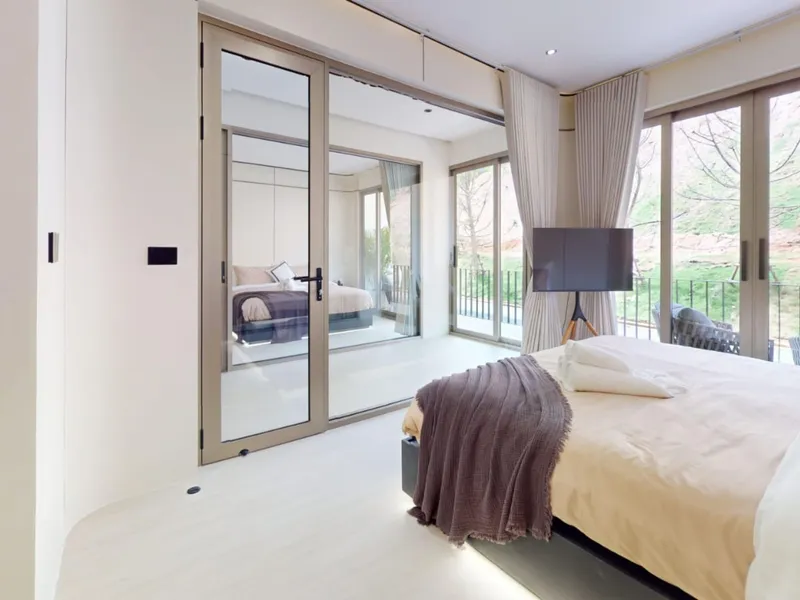
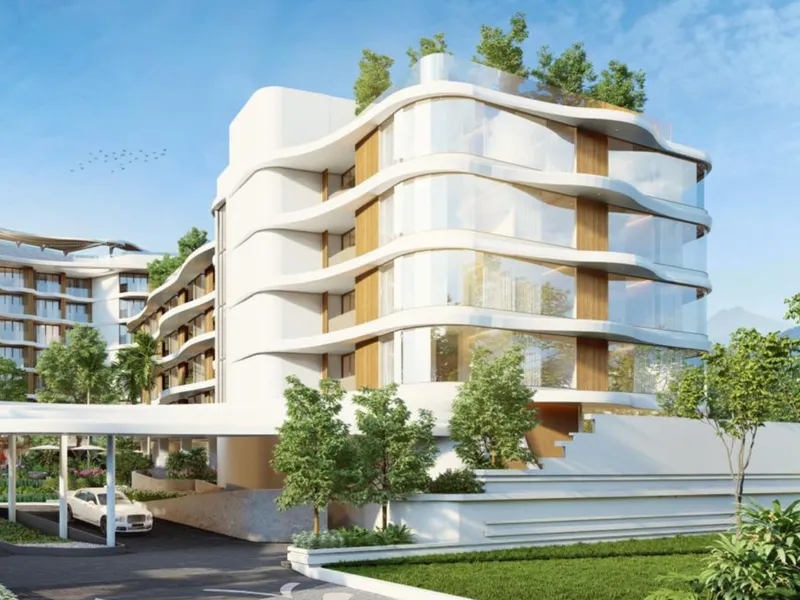 Developer render
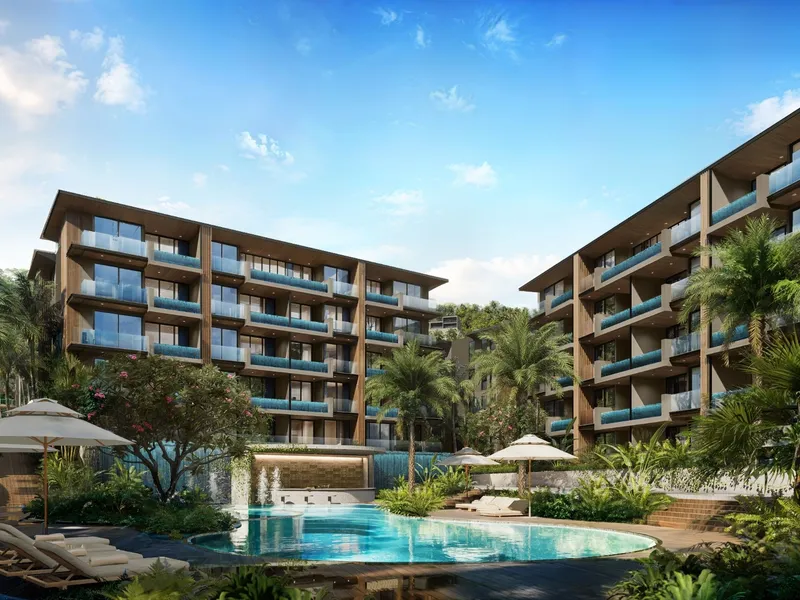 Developer render
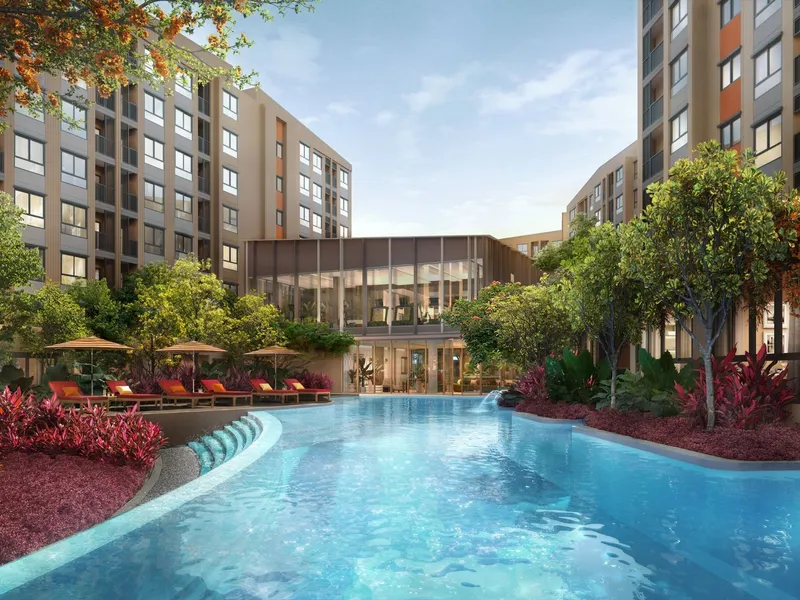 Developer render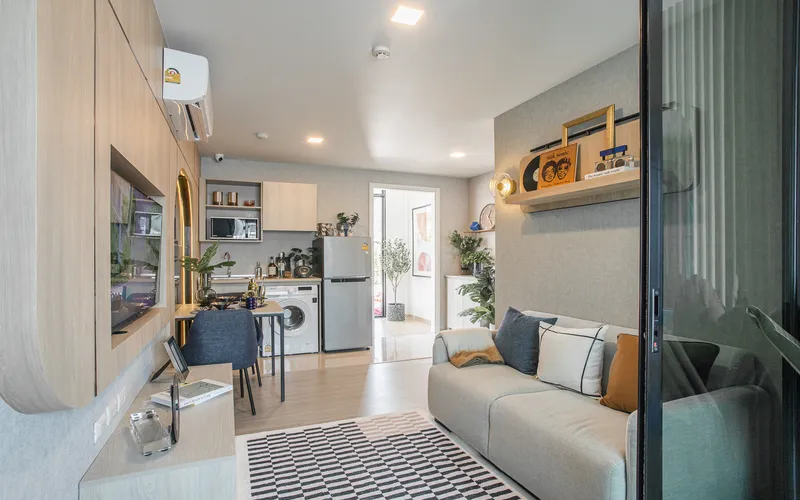
Ownership changes hands at the Phuket Land Office. The headline cost is the transfer fee — 2% of the official appraised value, which typically sits below the contract price. Which side pays is negotiable and should be fixed in the sale contract. On resales, additional duties can apply depending on the seller's status and holding period; these are calculated per transaction, so ask for a written cost breakdown before signing rather than relying on rules of thumb.
Purchase cost calculator
| Property price | THB 8,000,000 |
| Transfer fee: 50% of a 2% fee | THB 80,000 |
| Sinking fund | THB 27,000 |
| Total of included items | THB 8,107,000 |
Freehold purchase example: appraisal is assumed equal to price, the baseline fee is 2% and the buyer pays half. Enter the Land Office valuation, applicable rate and your contractual split. Concessions are not detected automatically. Excludes seller taxes, maintenance, meters, furniture and legal fees; not a lease registration calculator.
No structure protects a buyer completely from a project stalling, in Thailand or anywhere else, and a salesperson who promises otherwise is selling the promise. The narrower question buyers actually ask — can the developer take the apartment back if the company goes under — does have a precise answer, and it turns on a single date: the day the transfer is registered at the Land Department.
| Before registration | After registration | |
|---|---|---|
| What you hold | A contract with the selling company and proof of payment | A unit title deed in your own name |
| What is at risk | The money already paid | Nothing already paid — the unit is yours |
| If the company becomes insolvent | You file a claim alongside the company's other creditors | The unit is not part of the debtor's estate |
| Who runs the process | The bankruptcy court and the official receiver | Nobody: the deal is closed |
The practical rule follows from the table: the closer a payment sits to registration, the safer it is. Clearing the full price early to earn a discount moves construction risk onto the buyer, because escrow is voluntary in Thailand and most residential projects do not use it — the money goes to the developer directly. Our guide to developer instalment plans in Phuket covers how schedules are built and which clauses to read before signing.
None of these is a guarantee on its own. Together they move the decision from trusting a brand to reading documents, which is the part of an off-plan purchase a buyer can actually control.
From here, the practical next step is inventory. The new-build hub at /complexes/phuket lists all 189 projects with dated developer price lists, and our team accompanies transactions in Russian and English from reservation through registration.
The links below are statutory texts and government services. They explain the mechanics; they do not settle a transaction, and whether a rule applies to your contract is confirmed by the lawyer handling it.
Yes. Under Thailand's Condominium Act, foreign nationals can hold full freehold title to condominium units in their own name, provided foreigners collectively own no more than 49% of the unit floor area in that building and the purchase funds arrive from abroad in foreign currency, documented by an FET form.
Each condominium building may sell up to 49% of its total unit floor area to foreign owners on freehold terms. The quota is tracked by the developer and the building's juristic person, and the Land Department requires written confirmation of quota availability before it registers a foreign freehold transfer.
Remaining units are offered to foreigners on leasehold — a registered 30-year lease, with any extensions agreed in the contract rather than registered on title. Alternatively, buyers choose another building with open quota. Always request written quota confirmation before paying a deposit.
No. Condominium ownership is not tied to immigration status — a foreigner on a tourist entry can legally own a freehold unit. The reverse also holds: owning a condo does not by itself grant a visa or residency rights.
The Land Department registers foreign freehold only when the purchase funds entered Thailand from overseas in foreign currency. The receiving Thai bank issues a Foreign Exchange Transaction (FET) form as proof. Keep it: the same document supports repatriating your proceeds when you sell.
As of September 2026, Aperwind's Phuket catalog lists 418 apartments and condominiums across 189 projects, with entry prices from THB 2.1M and an island-wide median asking price of THB 10.2M. Bang Tao is the largest submarket, with a median of THB 12.3M and around THB 140k/m².
The transfer fee is 2% of the official appraised value, payable at the Land Office; which side pays it is negotiable and should be fixed in the contract. On resales, additional duties can apply depending on the seller's status and holding period — request a written per-transaction breakdown before signing.
Once the transfer is registered, nothing: the unit is recorded in your name at the Land Department, it has left the developer's estate, and its creditors have no claim on it. Before registration the position is different — you hold a contract and payment receipts, and if the seller becomes insolvent you file alongside other creditors through the bankruptcy court and the official receiver. That is why the payment schedule matters as much as the price: tie instalments to verified milestones, resist clearing the balance early for a discount, and judge the company on delivered buildings rather than renders.
Frequently yes, on two conditions: the building still has open foreign quota, and the seller is willing to release that unit on freehold terms. The payment does not upgrade an existing right — freehold and leasehold are registered differently, so the change runs as a separate transaction. Before the lease is registered it is a sales-desk decision. Afterwards the lease has to be deregistered, the unit transferred and registration costs paid again. Ask before the deposit, not after.
There is no market-wide figure to give, and quoting one would be invention rather than information. The premium is set by the seller, not by the state: the transfer fee is the same whoever buys, and the gap reflects a capped 49% allocation being priced as the scarce half of the building. It can be marginal in one project and substantial in the next tower. On a specific unit we obtain the developer's list showing both prices side by side and report the difference as a sum and as a share of the price, with the date the list holds good.
Ownership is available — it just does not arrive by waiting a lease out. A condominium unit inside the foreign quota is registered to you with no expiry date from the day of transfer, and that is the route to take if owning is the point. A 90-year lease is three thirty-year terms, because Thai law caps a registered lease at thirty years. Only the first term appears on the register; the two renewals remain obligations of the lessor and cannot be registered ahead of time. So the answer turns on which instrument you sign, not on how long you hold it.
Your title is unaffected: the licence is issued to the company operating the accommodation, not to unit owners. The rental model is what changes. Without a licence the building cannot legally take guests for a few nights, so nightly income drops out of the projection, while monthly and longer lettings sit outside the Hotel Act and remain available. Ask whether a licence exists today and in whose name, and for projects under construction, where the application stands and what the rental contract says if it is refused.
We will answer your questions on this topic and send a shortlist of properties for your budget.