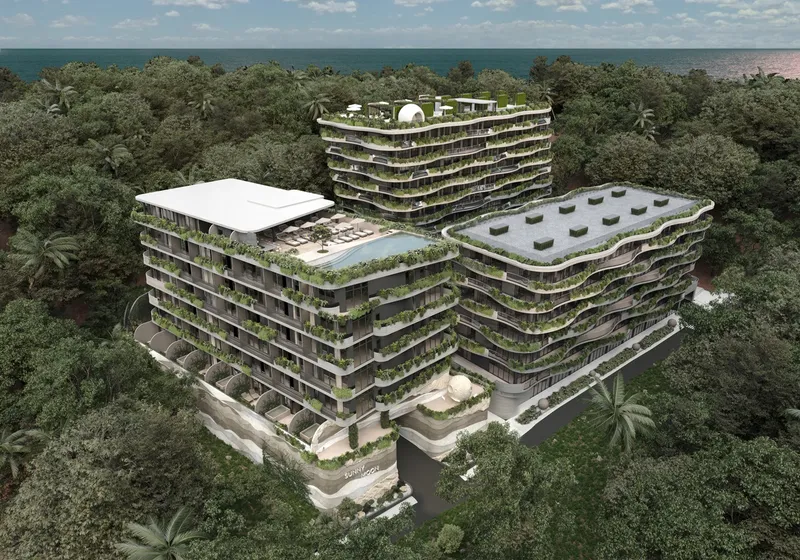
 Developer render
Price on request
“Somewhere we can use during our winter months, come over for two or three months, and then rent out the rest of the year.” The wording changes from buyer to buyer, the plan does not. Some call it a second home, some an investment they can also use, some put it plainly: I want it to pay for itself.
The arithmetic looks simple and hides two traps. The months you keep for yourself are usually the most valuable ones to let. And the unit that is easiest to rent is rarely the one you want to live in. What follows is how the choice actually breaks down, and what to ask before you reserve.
Phuket's high season falls in the winter months; the low season is the rainy one. Rates and occupancy differ markedly between them, so the real question is not how many months you keep, but which ones.
The answer changes both the area and the unit, so it is worth settling before viewings rather than after.
For yourself you usually want quiet; for letting you want people. The two cannot be fully reconciled, but the trade should be clear before you view anything.
The areas are compared along exactly these lines in a separate guide, with walking distance to the beach, the make-up of the inventory and a median price for each.
Studios and one-bedroom units let faster and sit empty less: demand for them is the broadest. Living in a studio for two or three months at a stretch, with a partner and a laptop, is a different proposition from a week's holiday. A two-bedroom lets more slowly but does not turn your own stay into an endurance test.
The median price per square metre in the catalogue is THB 130k/m², and the gap between unit types shows up on the metre rather than the headline price: that is the easier side to compare from.
You can let the place yourself from abroad, but every arrival means cleaning, keys, a handover and a message at three in the morning your time. That is why this scenario almost always brings in a management company or the project's own hotel programme, and the model you pick decides how many nights a year you may occupy your own apartment.
The management models, the income splits and what is deducted before the money reaches you are covered in a separate guide, along with the difference between a guaranteed return and a rental pool.
This is the clause that matters most for this scenario, and it almost never comes up at the first meeting. Hotel programmes cap owner stays by number of nights and usually split them by season: so many nights in the low season, fewer in the high, peak dates blacked out entirely. Rental pools are looser on stays and tighter on the split.
Ask for the number before you reserve, and ask to see it in the contract rather than the presentation. The whole live-and-let plan rests on it.
The phrase comes up constantly and means different things to different buyers. For some it means the rent covers the running costs. For others it means the rent covers the running costs and the instalments. The distance between those two readings is large, and only a calculation settles it.
Run it on your own unit: first the income from the months you hand to the programme, then the running costs for all twelve. Both calculators below work off live catalogue data rather than a brochure example.
Rental yield calculator
| Total invested | THB 8,000,000 |
| Gross annual income | THB 450,000 |
| Income after entered costs | THB 315,000 |
| Gross yield on total invested | 5.6% |
| Yield after entered costs | 3.9% |
| Simple payback | 25.4 years |
Yield uses purchase price plus acquisition and setup costs. Extra costs default to zero: enter your own budget. Include building fees, insurance and a repair allowance in fixed costs; do not also count them in the percentage. Tax and financing are not calculated automatically. Simple payback assumes unchanged income, without resale proceeds or appreciation. This is not a forecast.
Then subtract the months you keep. Calculating a yield on a full year and living in the place for four months is the single most common mistake in this scenario.
Cost of ownership calculator
| Service charge: 35 sqm × THB 60 | THB 2,100/mo |
| Electricity | THB 1,500/mo |
| Water | THB 150/mo |
| Internet | THB 600/mo |
| Total a month | THB 4,350 |
| Land and building tax, a year | THB 1,000 |
| Total a year | THB 53,200≈ 1.1% of the price a year |
The defaults are a 35 sqm one-bedroom at THB 5M and a service charge of THB 60 per sqm a month — the median across 135 project records in our own catalogue (lower quartile 40, upper 80). Electricity and water inside a condominium are rebilled by the management company, so there is no single figure for every building: put in the rates from your own contract. The tax rate depends on the use and the appraised value, and exemptions are not applied automatically. This excludes insurance, repairs, refuse collection, rental management fees and the one-off costs at purchase — those are in the purchase cost calculator.
The catalogue holds 571 listings in Phuket, of them 418 apartments and 148 villas. The median price is THB 10.2M and the entry point is THB 2.1M. Buyers on a live-and-let plan most often take one- and two-bedroom apartments in projects that run their own rental programme, so that is the easiest place to start.
Developer render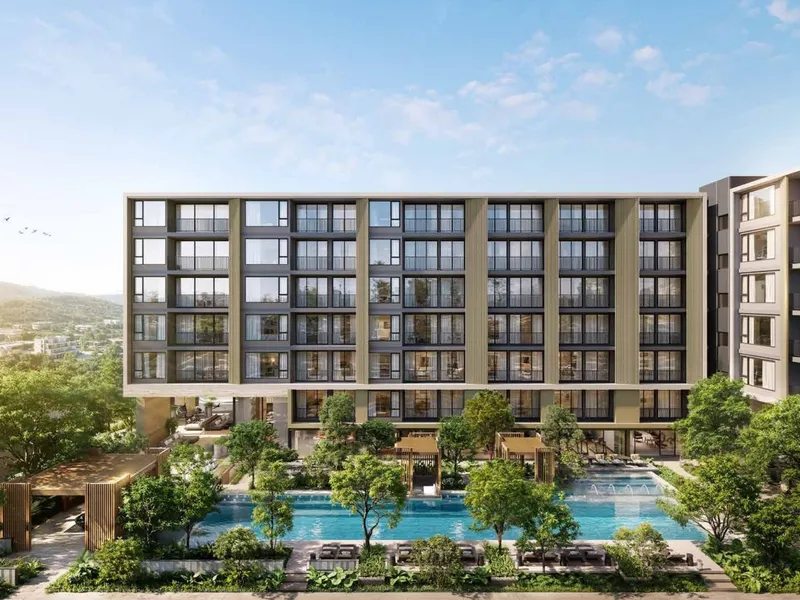 Developer render
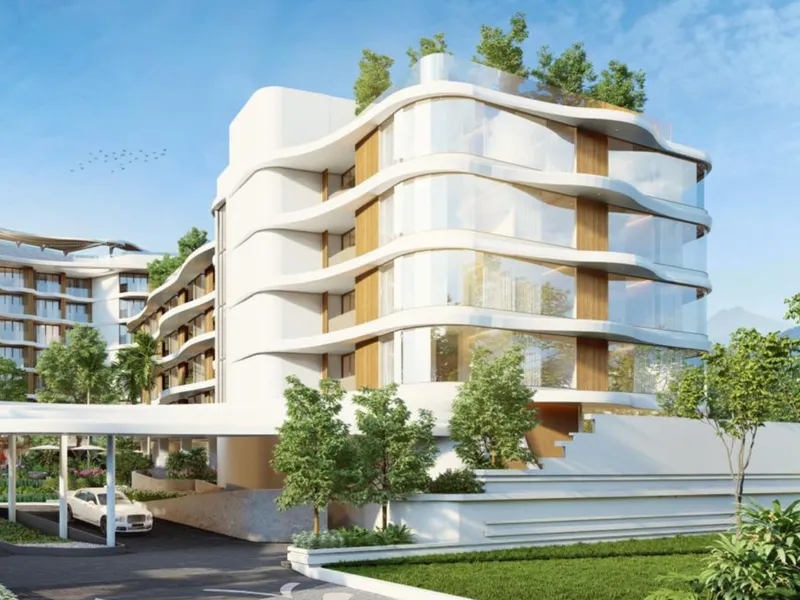 Developer render
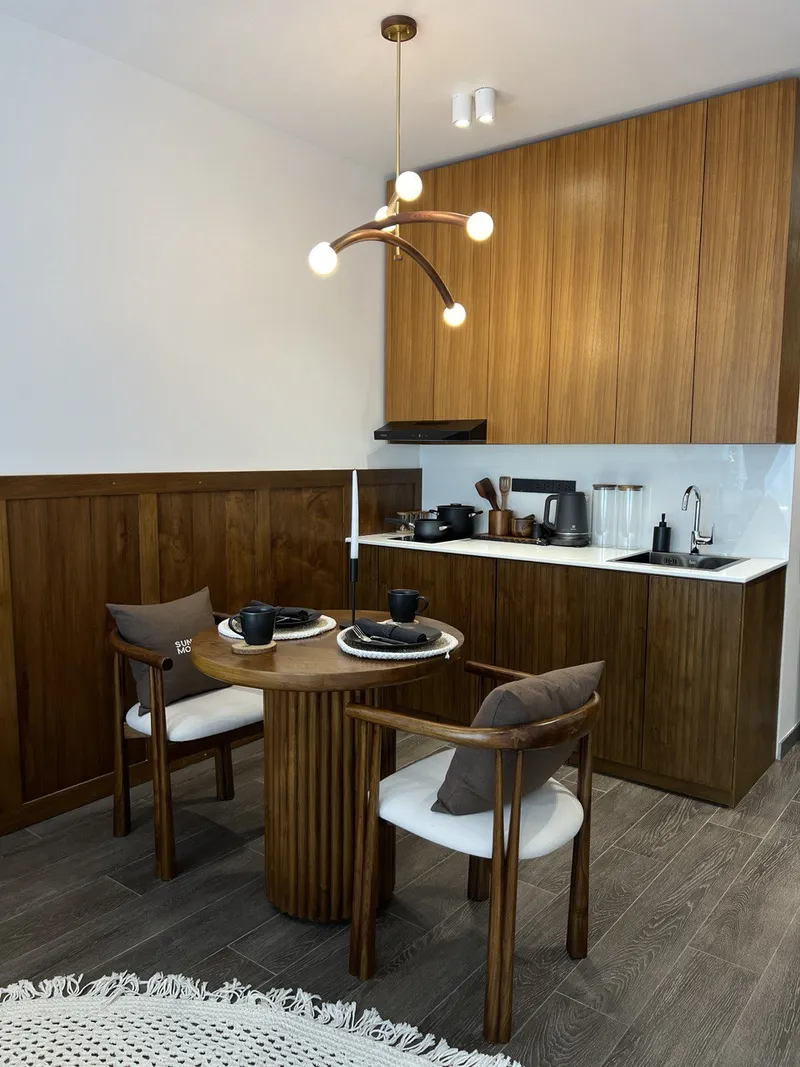 Site visit · 31 January 2025
Yes, but the number of nights is capped by the contract. Hotel programmes usually split owner stays by season: more nights in the low season, fewer in the high one, peak dates blacked out. Rental pools are looser on stays but divide the income differently. Check the number, and the rules for carrying unused nights over, in the contract text before you reserve.
There is no single figure for the island: occupancy depends on the area, the type of letting and who runs it. Tourist beaches give a high rate in season and drop sharply out of it; areas with expats and families give a flatter year at a lower rate. Ask the developer or the management company for occupancy reports from previous years for that specific project, rather than an island-wide average.
Letting it yourself keeps the whole income but requires presence: arrivals, cleaning, keys, guest messages. From abroad that only works with someone on the ground, and their time costs money too. A management company takes a share and absorbs the operational side. Where the owner also lives in the unit for part of the year, the second option is usually the one chosen.
Staying beyond the visa-free period requires a visa, and buying property does not by itself grant one. The available routes, including the investment threshold, are set out in a separate guide on visas and property.
It depends what you mean by the phrase. Covering the running costs from rent is achievable. Covering the running costs and the instalments from rent while also keeping part of the high season for yourself is a combination that rarely adds up, and it has to be tested against a specific unit. The calculators in this guide run on live catalogue data.
A studio lets more easily and sits empty less, but living in one for two or three months at a stretch is hard. A two-bedroom lets more slowly and does not make your own stay a trial. If you plan to spend more than two months there yourself, a separate bedroom is usually worth the slower letting.
We will answer your questions on this topic and send a shortlist of properties for your budget.